Diving Conditions in Komodo
The Komodo National Park is one of the most diverse and rich marine environments in the world, with over 1000 species of fish and 250 species of reef building corals.
The park has two distinctly different marine environments, the North or Central and South area of the park. The conditions in the park change seasonally. There are over 50 regularly visited dive sites and still more to be explored.
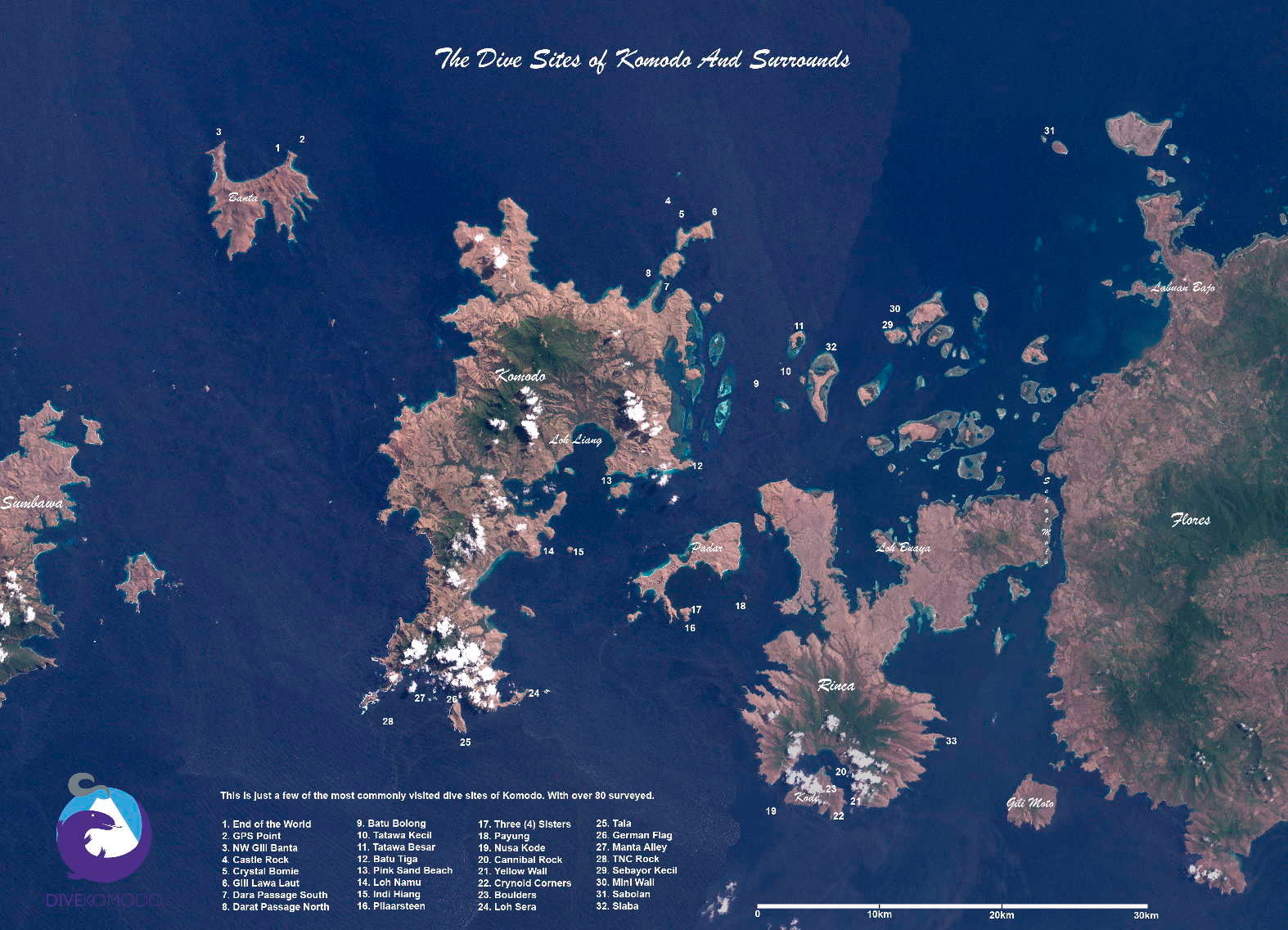

Northern Komodo
In the north the water is typically warm and very clear. The stronger currents makes these sites mainly suitable for experienced divers, although exceptions can be made at quarter moon phase. The strong currents offer interesting dive plans and some fast drift dives, in this area good buoyancy is a must!
The topography is impressive and the currents attract the big stuff including white and black tip sharks, grey reef shark, Napoleon Wrasse, Giant trevally, mantas and mobula rays. In addition the regular reef life is very rich and colorful. In the rainy season Dec-March these sites might at times not be accessible due to north-western winds.
Temperature
March-Sept: 26-28 C
Oct-Feb: 24-26 C
Visibility
March-Sept: 20-30 m
Oct-Feb: Below 20 m
Wetsuit Recommendation
March-Sept: 3 mm
Oct-Feb: 3 or 5 mm
Central Komodo
The central area has the most varied types of dive sites and marine life can be very different between sites even within close proximity. There are wall dives, pinnacle dives, drift dives, protected coral gardens, great muck diving and much more. Turtles are abundant, mantas are frequently seen at two of the sites and reef sharks are fairly common too.
It is hard to summarise the Central as a whole, better to read more about the individual sites in the “Dive Sites” section.
Temperature
March-Sept: 26-28 C
Oct-Feb: 24-26 C
Visibility
March-Sept: 20-30 m
Oct-Feb: Below 20 m
Wetsuit Recommendation
March-Sept: 3 mm
Oct-Feb: 3 or 5 mm
Southern Komodo
From Pantai Merah (Pink Beach) and further south, you move into the cooler upwelling water from the depths of the Indian Ocean. The upwellings, caused by ocean currents colliding with the continental shelf, force an endless supply of planktonic food in to the area and result in an explosion of marine-life. The reefs in the south are vibrant in soft coral life, large branching corals, and sea fans.
The invertebrate life here is amazing, and loved by experienced divers and photographers all year round. There is just so much, nudibranchs, holythurians, frog fish, pygmy sea horse, torpedo rays and of course the filter feeding manta rays.
For sport divers the best season for diving in the south is from October through April, as we frequently get clearer warmer water flooding the sites. In May to September this area may get big waves from the south-eastern.
Temperature
March-Sept: 26-28 C
Oct-Feb: 24-26 C
Visibility
March-Sept: 20-30 m
Oct-Feb: Below 20 m
Wetsuit Recommendation
March-Sept: 3 mm
Oct-Feb: 3 or 5 mm
